• Skip to primary navigation
  • Skip to main content

← cbs.dk

Wellbeinglab

Wellbeinglab

Stress prevention and well-being for students

  • Activities
  • Tools
  • Research
  • About
    • Background & History
    • Who we are
  • Show Search
Hide Search

esh.bhl@cbs.dk

Anchors and bridges: international student well-being at CBS

esh.bhl@cbs.dk · 02/11/2026 ·

CBS Well-being Lab initiated this project to investigate if and how international student well-being is an issue CBS, and how it might be addressed. This is a fairly well-documented but less well researched problem, and in conversation with students we became aware that international students might face unique challenges that deserve more in-depth attention. This prompted our curiosity and led us to conduct an interview study of 16 bachelor’s and master’s students at CBS, including both EU and non-EU backgrounds.
The resulting report, Understanding International Student Well-being at Copenhagen Business School (Gürsoy & Pedersen 2026), explores how students experience well-being while studying in a new country, what supports them and what makes student life more difficult. It confirms that there it is an issue at CBS but also provides more surprising insights on how much of the issue revolves around the more intricate dynamics of fitting into a social study environment. The report identified three broad areas where CBS could consider strengthening its efforts: opportunities for social connection during study start and beyond; study groups as spaces of support and belonging; and support for teachers in creating inclusive and psychologically safe learning environments.

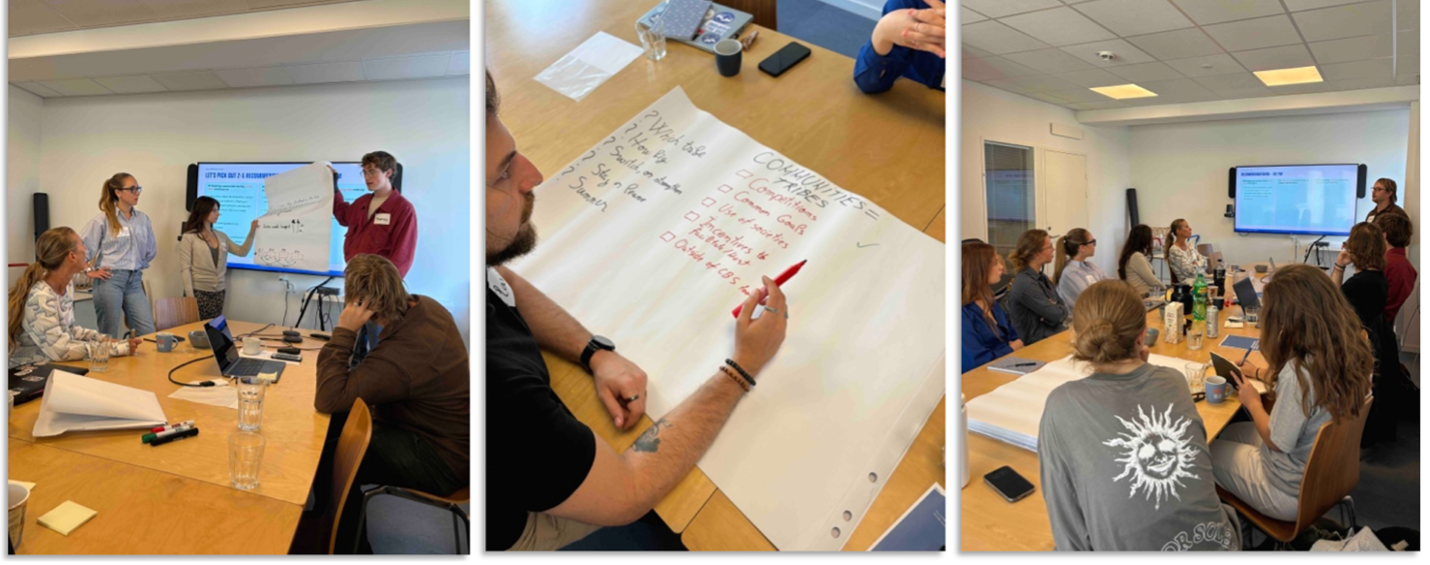
To further mature the recommendations from the report, we recently teamed up with CBS Students and hosted a workshop with 9 international students, where the recommendations were discussed and further elaborated.
Starting, struggling, and standing together: insights from the study

Students highlighted several positive aspects of CBS, including its English-first environment, career services and campus facilities. Experiences nevertheless differed considerably between study programs, particularly in the extent to which opportunities for social interaction were built into classes, group work and program activities.

Across the interviews, social connection emerged as a particularly important condition for well-being. Relationships gave students access to practical knowledge, support and a sense that they were not navigating an unfamiliar environment alone. Yet connections were often difficult to establish. Students described difficulties entering established social circles, while language could create informal divisions even where teaching takes place in English. The interviews also showed that proximity alone does not produce connection: how students are brought together, for example through study groups, matters.

Anchors and bridges: insights from the workshop

The workshop both strengthened and nuanced the report’s preliminary recommendations. The discussion complicated a seemingly straightforward ambition to strengthen “integration”. Several participants questioned whether successful international student well-being should be measured by how successfully international students form relationships “across the divide” with Danish students.

This led to an important distinction. Being with other international students can itself provide something valuable: other students understand what it is like to arrive from elsewhere, navigate unfamiliar systems and build a life in a new country. These students tend to form communities around shared languages, nationalities and experiences. At the same time, participants also wanted opportunities to meet Danish students and to cross the linguistic and social divisions they encountered at CBS. A useful way of understanding the discussion is that students may need both anchors and bridges: communities in which they can establish familiarity, support and belonging, alongside opportunities to encounter people outside those communities.

The workshop highlighted that CBS already offers many opportunities for social connection through introduction activities, study groups, student societies, buddy programs and events. There was also a strong consensus that study start could be used even more deliberately as a period for building initial anchors and wider bridges. There are good examples within CBS of practices that students experience as effective, which creates an opportunity to identify and share what works across programs instead of having every program invent its own approach.

Well-being beyond study start was another major topic, with participants pointing to the sharp drop in structured opportunities for connection after intro week and highlighted the summer break as especially strenuous for students who remain in Copenhagen.

Study groups emerged as the most divisive and complex topic regarding what they are intended to achieve and how they are facilitated. The workshop supported the value of pre-assigned groups, particularly in the early phases of a program where they can provide an immediate point of contact and create encounters across existing networks. At the same time, workshop participants stressed that a pre-assigned group is not automatically inclusive. Composition matters, language matters, and groups need support in establishing ways of working together. Existing dialogue-based tools developed by CBS Well-being Lab could be used to support these conversations within study groups.

Finally, we discussed how everyday practices shape participation. The report showed how informal shifts into Danish can leave international students outside conversations. One workshop participant described a simple practice from intro week: anyone switching away from English had to wear a deliberately silly hat until somebody else did the same. A playful intervention made the shared language norm visible. Other examples included rotating groups, structured classroom interaction and buddy arrangements involving more than two people, and there was a clear support for broader awareness of the vulnerable context of international students.

We carry these recommendations into the further work we undertake together with CBS Students in the coming years.
Leadership, ambition and the ideals we struggle to live up to

esh.bhl@cbs.dk · 02/11/2026 ·

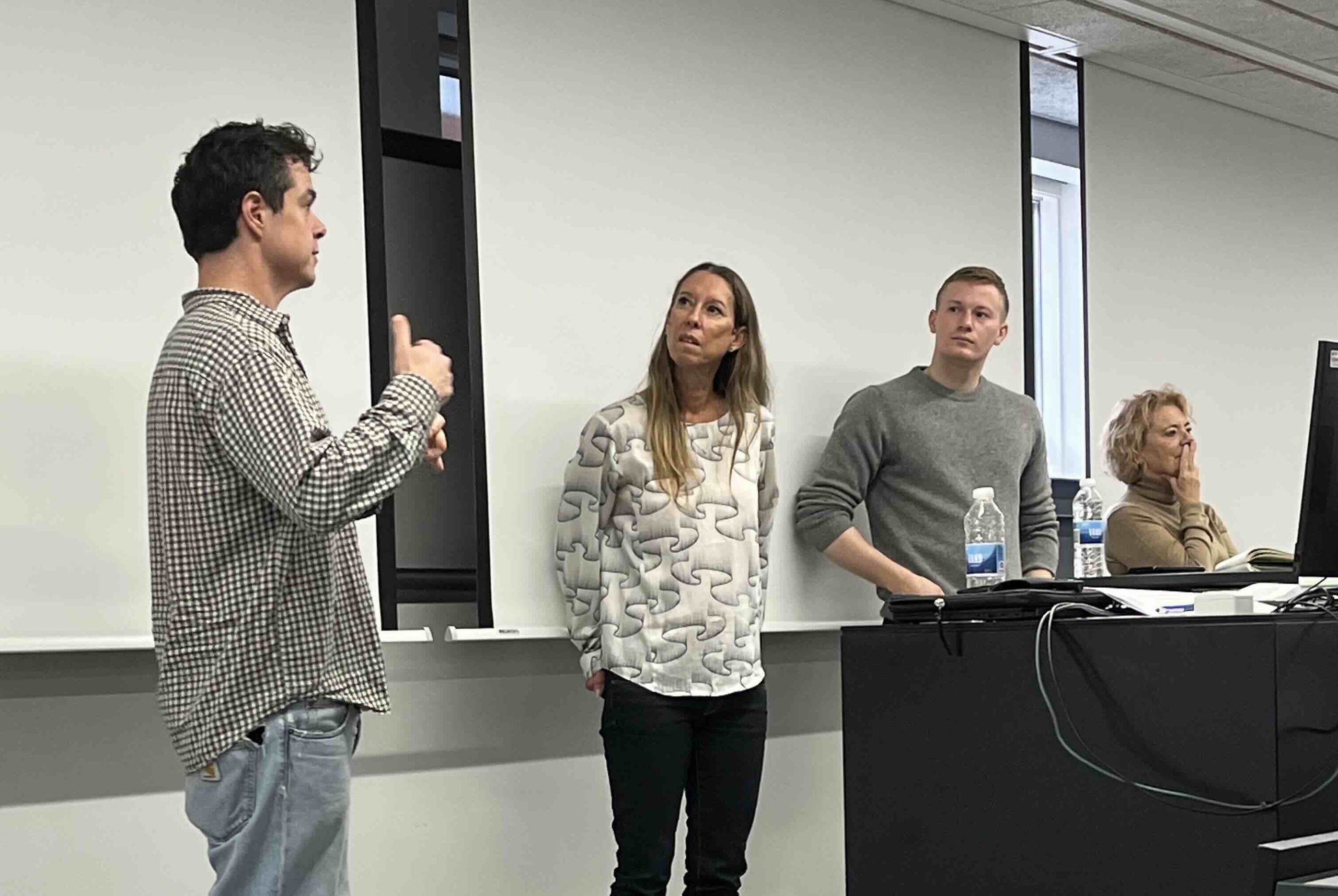
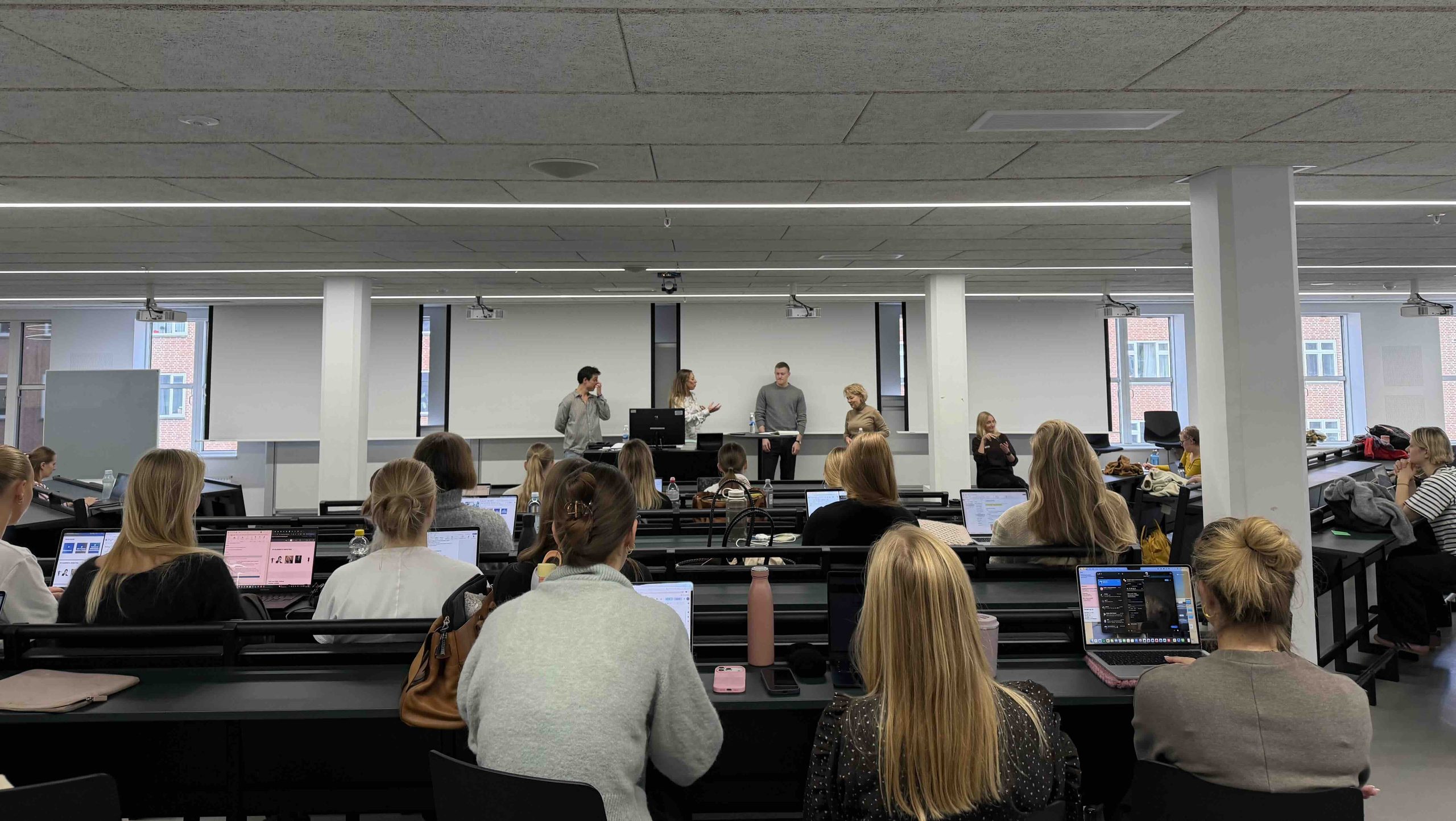
How do we navigate situations where our professional ambitions, personal values and responsibilities towards others pull us in different directions? This question was at the centre of a dilemma session at Copenhagen Business School, where three guests joined students from the course Shame, Stress and Leadership to explore dilemmas from working life.

What happens when a manager’s desire to be caring and fair conflicts with financial responsibilities? How do you maintain your professional identity when returning from maternity leave to a demanding workplace? And how do you set boundaries at work when being constantly available has become part of what it means to be a dedicated employee?

These were the three dilemmas discussed by Bolette Christensen, Lasse Skjønning Andersen and Albert Harson during a session at CBS on 23 October 2026.

The dilemmas were collected by students through interviews with managers and employees and subsequently developed into cases for classroom discussion.

The three guests brought different experiences to the conversation. Bolette Christensen has extensive experience in executive leadership and board work. Lasse Skjønning Andersen is an entrepreneur and founder of GRØD, while actor Albert Harson contributed perspectives from a profession characterised by high performance expectations and dependence on the judgement of others.

Different perspectives on difficult decisions

The conversation revealed how differently the same dilemma can be approached.

Albert Harson reflected on how it is possible to take on a role without pretending to be someone else. He also pointed out that part of being a leader is learning to accept that not everyone will like you.

Bolette Christensen added another consideration: Before taking on a leadership position, it is worth asking yourself whether you are prepared to deal with the many dilemmas and difficult decisions that come with the responsibility.

Lasse Skjønning Andersen described honesty as his “lightsaber”, while acknowledging that being honest is not always easy.

During the discussion about the young consultant struggling to set boundaries in a culture of long working hours, Lasse also reminded us of the value of spending time with the people closest to us.

Together, these perspectives opened up questions about leadership, professional identity and the ideals we hold ourselves to. They also illustrated how difficult it can be to act when different commitments and expectations seem equally important.

Developing judgement through encounters with others

The dilemma session is part of CBS WellbeingLab’s work to develop teaching formats that allow students to explore the human dimensions of leadership and working life.

Many situations we encounter in professional life involve competing expectations, responsibilities and values. Drawing inspiration from Keith Grint’s concept of wicked problems, students explore how the way we understand a situation shapes the possibilities for action that we can recognise.

By engaging with other people’s experiences and perspectives, students have an opportunity to question their own assumptions and develop their capacity for critical judgement.

At CBS WellbeingLab, our research explores judgement and agency (handlekraft) as relational capabilities that develop through our relationships with others. Critical judgement involves the capacity to examine and reconsider our own assessments considering different perspectives. Agency also concerns our capacity to take responsibility and engage with the task at hand, even when we face uncertainty and competing demands.

The dilemma session is one of the teaching formats through which we seek to support the development of these capabilities. By listening to how others interpret and respond to difficult situations, students can become aware of considerations they may not previously have recognised, expanding their understanding of what it might mean to act responsibly.

The conversation is available as a podcast

The dilemma session was recorded and will be made available as a podcast, allowing the conversation to be used in other educational settings at CBS and shared with audiences beyond the university.

This was the third time the format has been used in the course Shame, Stress and Leadership, and students’ feedback has been very positive.

Listen to the podcast here to hear how the three guests approached the dilemmas from their different perspectives

“Relational well-being is one of the greatest takeaways from my studies”

esh.bhl@cbs.dk · 04/09/2026 ·


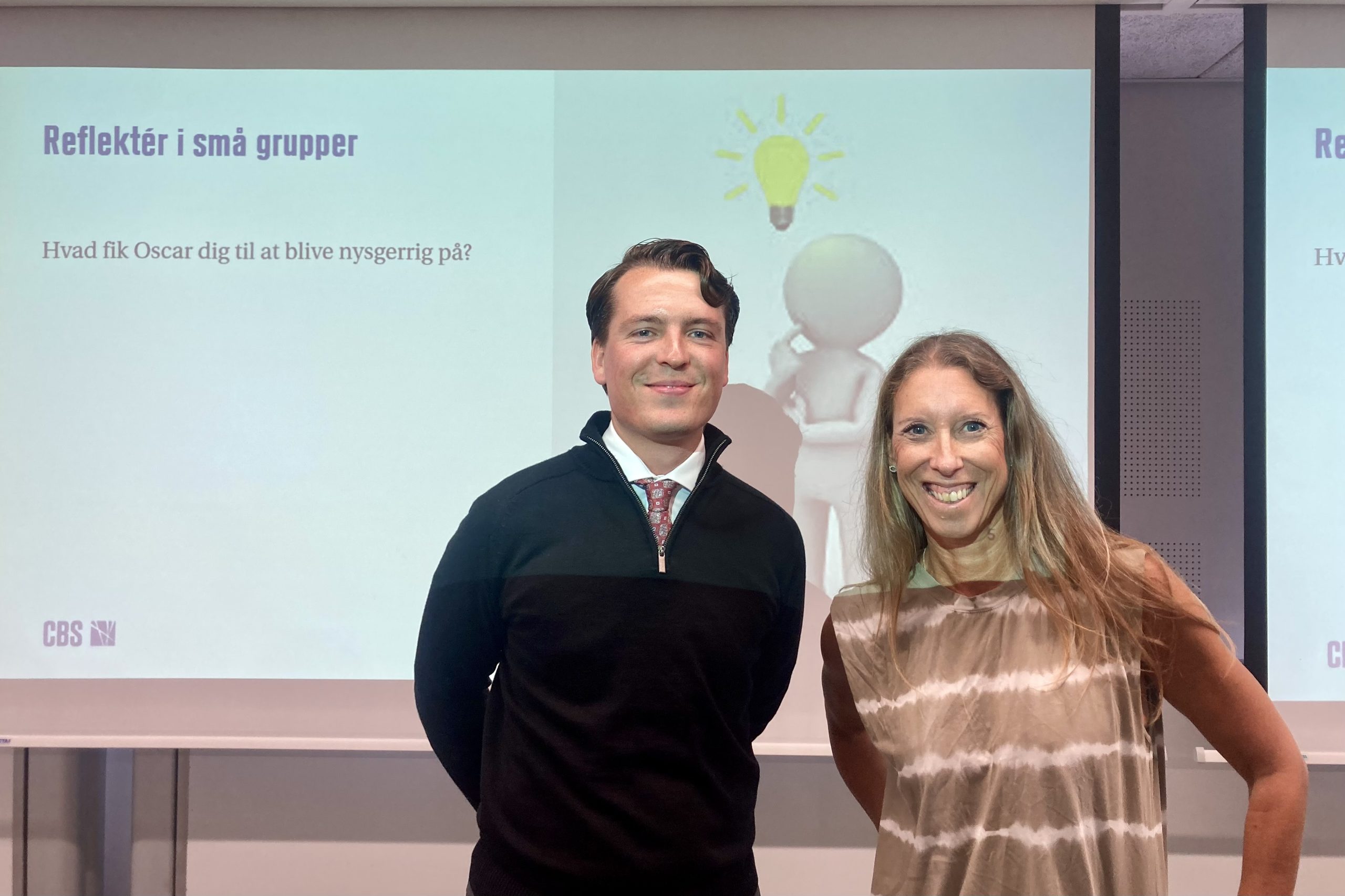
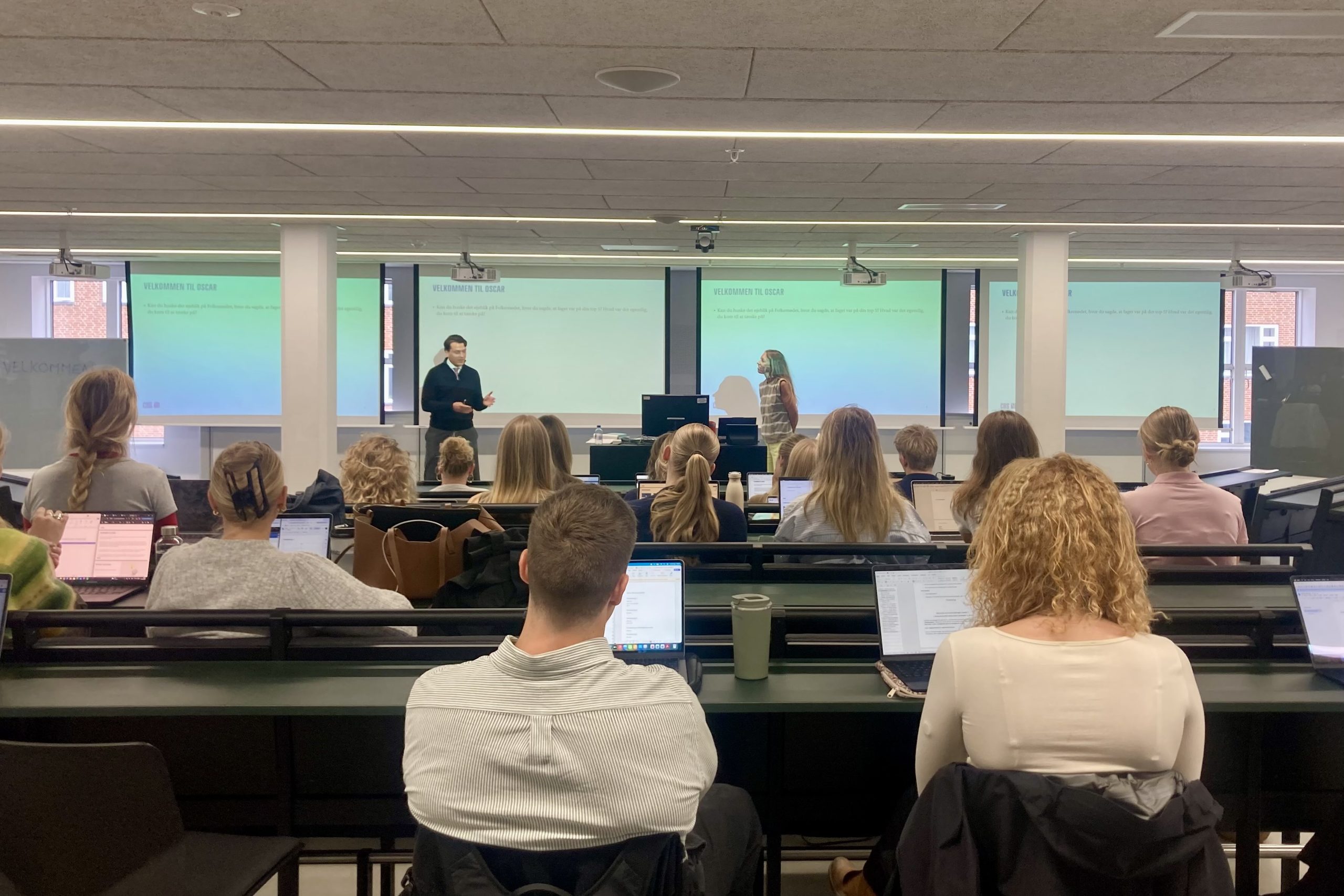
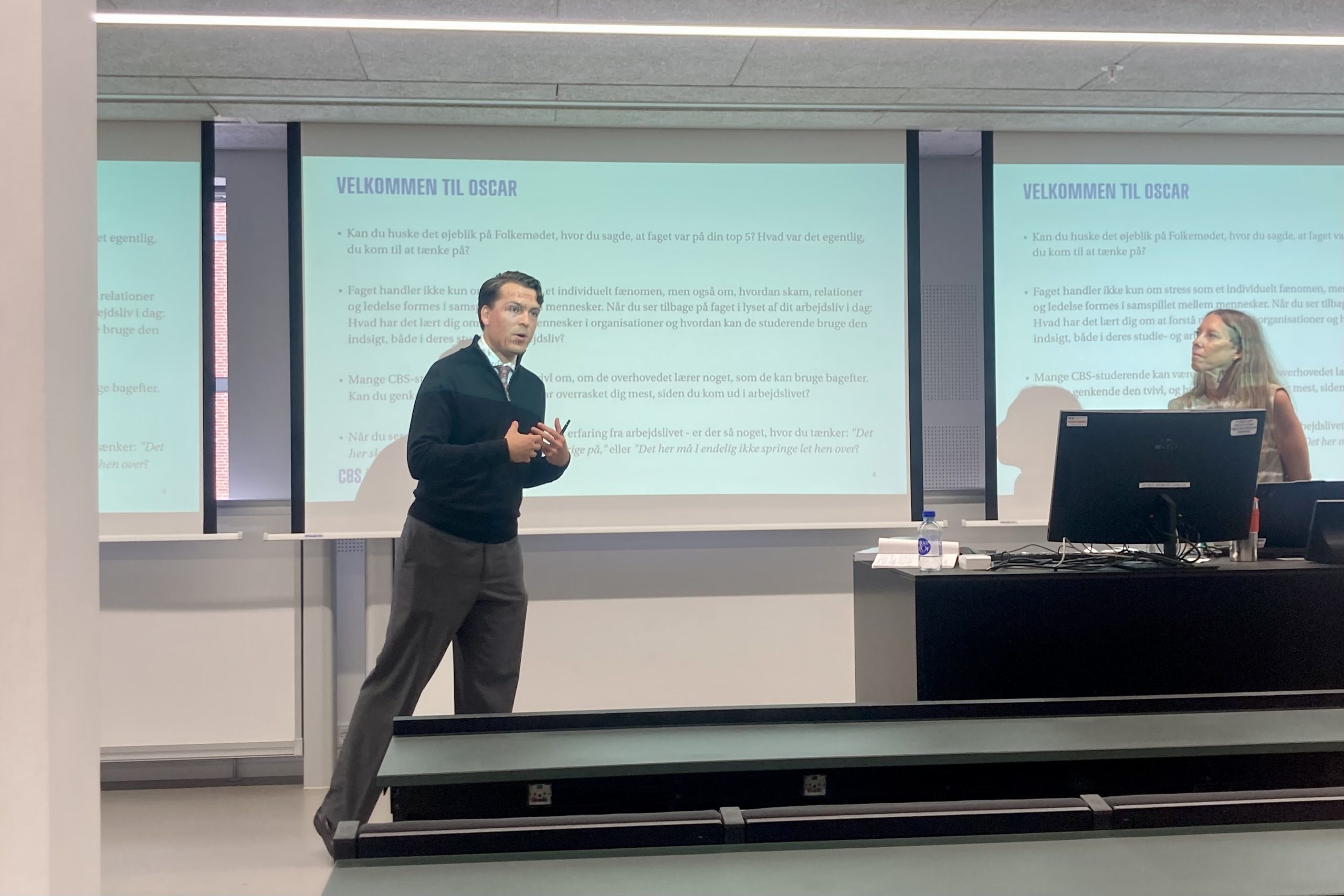
CBS alumni and management consultant Oscar visited our course, Stress, shame and leadership, to share the main points he took from the course four years ago and how he uses these today as a management consultant.

The power of seeing well-being from a bird’s eye view

“I really think it was the one of the greatest learnings from my time at CBS. To become aware and understand how stress and well-being is more than just an individual phenomenon, but rather is intertwined with organizational conditions and contradictory demands. I mean, the fact that two people can react differently to the same stressful situation is a clear signal to me that there is more than meets the eye when it comes to tackling stress. It also means that the same leadership response may not work for everyone. Leaders need to remain curious about what each person requires, while also paying attention to the relationships and organizational conditions surrounding the situation.”

Oscar continued to explain how the competence to recognize patterns has been a massive strength in his career after graduating from CBS. “The capacity to draw patterns between both employee and employer behavior as well as in the often counterproductive, contradictory demands that the broader organization put on its members, taking a bird’s eye view on the sensitive problems has been key to me.”

Confronting the paradox: when the idea of individual performance challenges organizational learning

Oscar went on to reflect on a central paradox in many of today’s organisations. The very systems designed to strengthen performance may inadvertently inhibit the openness upon which sustainable performance depends. If uncertainty, limitations, and concerns are reduced to signs of individual inadequacy, they are more likely to remain unspoken. As a result, organisations risk losing valuable insight into the conditions shaping both people’s well-being and ability to perform.

For Oscar, relational well-being therefore requires more than supporting individuals in managing pressure. It also depends on professional relationships in which difficult matters can be voiced and explored before they develop into larger problems. This requires leaders to be attentive not only to what people say, but also to the emotions and reactions that may signal tensions within their relationships or working conditions. He emphasized that leaders carry a particular responsibility for creating the conditions for such dialogue, while employees can contribute by leading upwards and bringing otherwise overlooked dynamics into view, enabling the organisation to learn and develop more sustainable ways of working.

Study groups is a great training ground for learning how to “choose me”

Reflecting on how he experienced similar situations during his studies, Oscar added: “You know the context of the study group and the classical situation of not meeting a deadline. Almost intuitively, we tend to point fingers at the one person who inevitably caused the delay – but what about all the surrounding stuff? How about asking questions like “did we plan in the right way? Did we built the right relationships and bonds between each other to be able to communicate well?” I think there is so much worth in trying to unfold the process and the surrounding factors before we evaluate the individual performance. The constant evaluation around us is very real, but if we fly up and get a greater perspective, we have a chance to understand ourselves better”

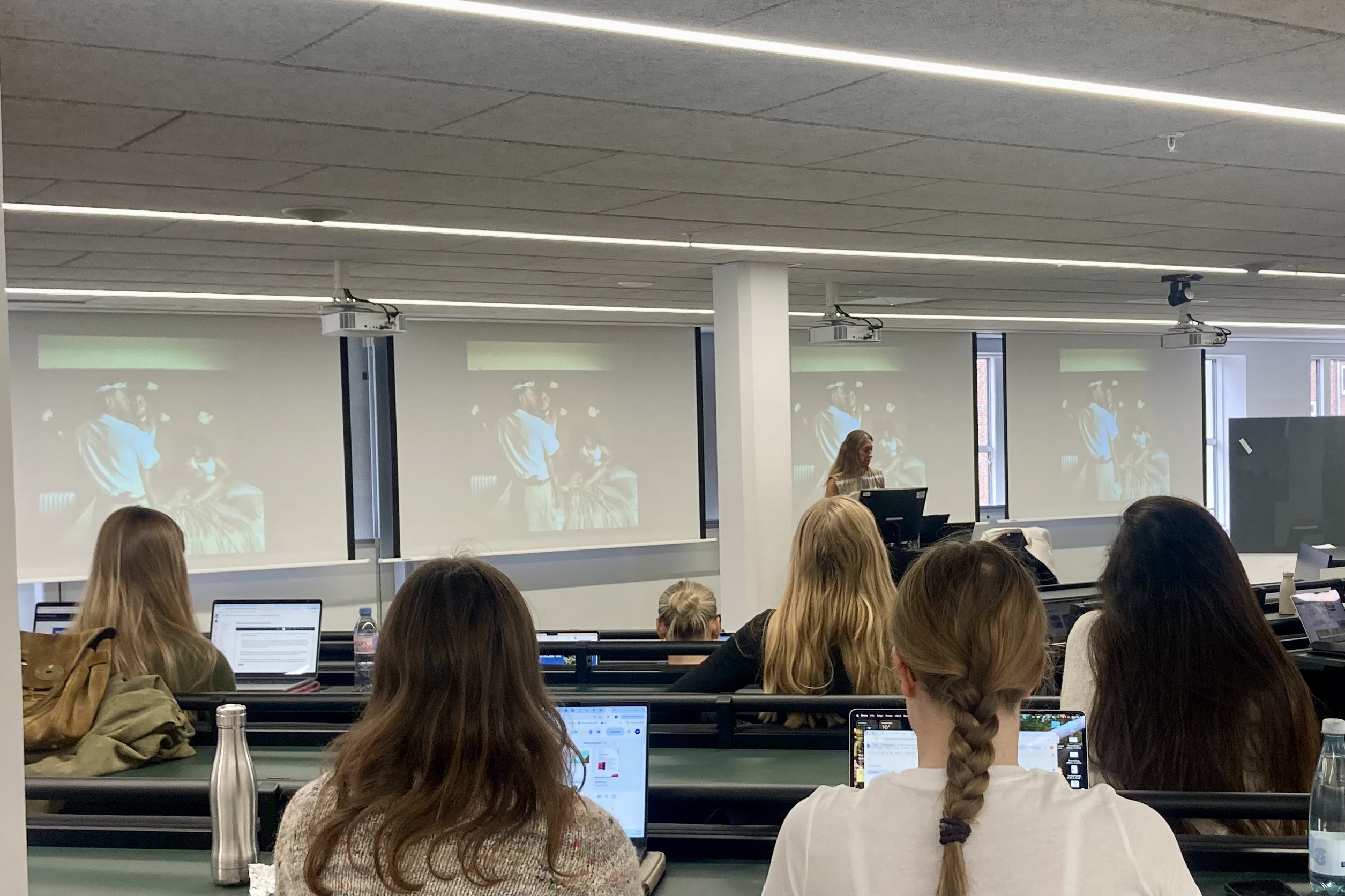
Interestingly, we started the class by listening to Kendrick Lamar’s song “Mirror” in which Kendrick reflects on all the conflicting demands and expectations he faces as both a superstar and a complex human. By the end of the song he says “sorry I didn’t save the world, my friend, I was too busy buildin’ mine up again” and then returns to a newfound self-understanding, repeating the chorus “I choose me, I’m sorry”. In the world of constant evaluation, young students and the newly employed risks taking responsibility for something that is structurally produced, but maybe our best chance at finding resolve is taking careful stock of all the conditions we are surrounded with and giving them a name?

Copyright © 2026 · Copenhagen Business School

  • Knowledge & Results
  • Dialogue Cards
  • Podcasts
  • Videos
  • Pri­vacy policy
  • ACCESSIBILITY
  • Cook­ie